Feasibility study on regulation of digital sequence information
After three years, our project Feasibility Assessment of Regulation of Digital Sequence Information (FAR-DSI) officially concluded on 31 October 2025. During its lifetime, the project has evolved into a collaborative, practice-oriented effort to support international policy decisions on DSI from the perspective of biological databases.
When FAR-DSI began in 2022, the DSI debate under the Convention on Biological Diversity (CBD) was still covered by uncertainty. The project was therefore designed to assess policy options for benefit-sharing arising from the use of DSI and their potential implications for scientific databases.
This landscape shifted significantly after COP15, when Parties adopted a multilateral approach to DSI benefit-sharing. In response, the FAR-DSI team adapted its work programme to focus on what truly mattered: providing timely, evidence-based input on how such a system could be designed effectively (or poorly) for databases.
Key results
Through targeted interviews, workshops, and working groups, FAR-DSI produced key outputs that have already informed policymakers and scientific communities, including two policy briefs in 2023 and 2024
- "Challenges and opportunities of geographical origin information in DSI benefit-sharing: a global analysis from the academic sector." Zenodo. https://doi.org/10.5281/zenodo.10050454
- "Digital Sequence Information (DSI) data governance practices to support benefit-sharing and science." Zenodo. https://doi.org/10.5281/zenodo.12755428
Further outputs include a peer-reviewed paper submitted in 2025, and a draft template language for biological databases to support the implementation of COP16 Decision 16/2 (Paragraph 10).
Project activities
- Extensive evidence gathering through 17 expert interviews and a global survey.
- Two international workshops and two co-creation working groups bringing together diverse stakeholders.
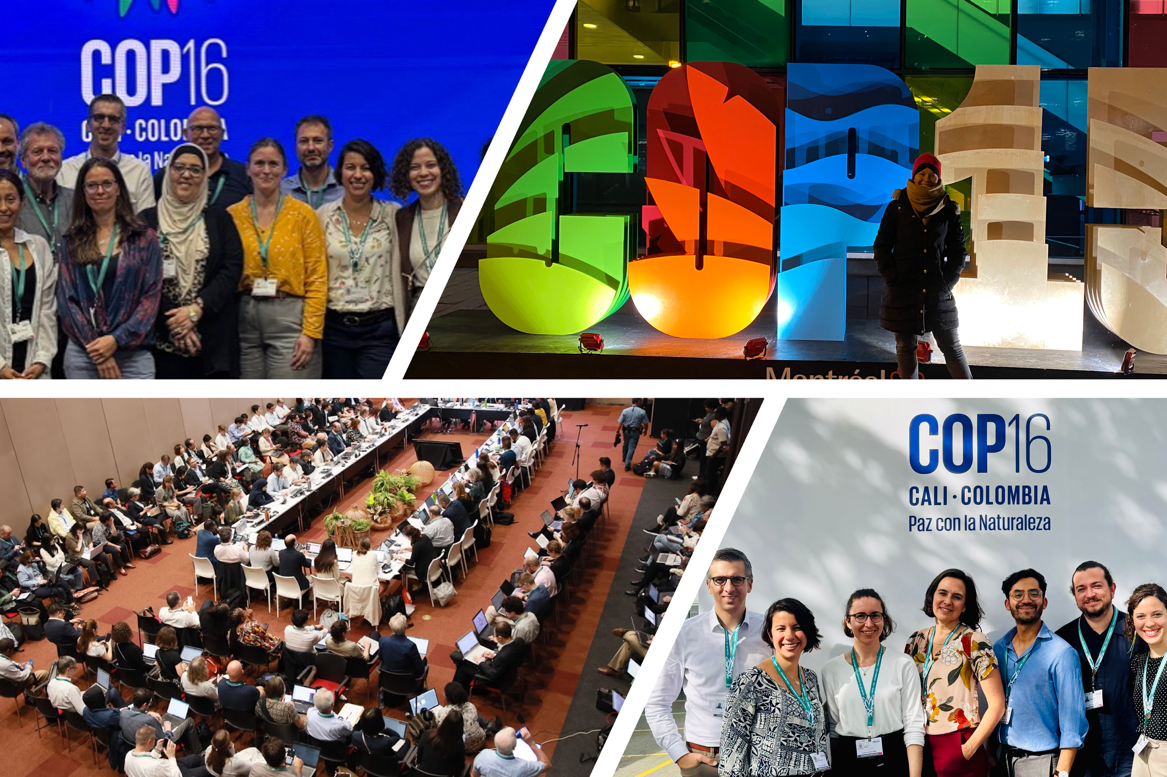
- Strong international engagement, with participation in two CBD COPs, two DSI Open-Ended Working Group meetings, and a joint COP16 side event with the DSI Scientific Network.
- Nine Sounding Board meetings providing strategic and scientific guidance.
Beyond the outputs, the most valuable result of FAR-DSI has been the space we provided to engage database managers, policy experts, and policymakers in a shared dialogue on how to align open science principles with fair and equitable benefit-sharing. In this way, the project has shown how structured collaboration and continuous exchange can bridge science and policy in a meaningful way.
We warmly thank all contributors, collaborators, and supporters who have shared this path with us. The FAR-DSI experience will continue to inspire future efforts to connect data infrastructures with global biodiversity goals.
The FAR-DSI Team
Dr. Débora S. Raposo, GFBio e.V.
Dr. Barbara Ebert, GFBio e.V.
Dr. Amber H. Scholz, Leibniz-Institut DSMZ
Funding
The FAR-DSI Project was supported by the German Federal Agency for Nature Conservation (BfN) with funds from the Federal Ministry for the Environment, Climate Action, Nature Conservation and Nuclear Safety (BMUKN) (Project Number 3522800600).